Guides · Oviedo, Florida
Oviedo vs Sanford: Which Florida Town to Visit
Oviedo’s free-roaming chickens are the welcome committee, and the celery money that built the downtown makes this a laid-back day trip with more charm per square foot than its busier neighbor to the north.
Oviedo's Free-Roaming Chickens Set the Tone
You’ll hear them before you see them—a low cluck, a rustle of feathers, a rooster’s indignant crow echoing off the storefronts. Oviedo’s downtown chickens are not a zoo exhibit or a marketing stunt; they are simply there, pecking along sidewalks, strutting through parking lots, and perching on fences like they own the place. Because in a way, they do. This is their town, and everyone else is just visiting.
The birds are the defining feature of Oviedo’s downtown atmosphere, the thing that makes it instantly recognizable and quietly hilarious. They set the tone: unhurried, a little scrappy, and completely unconcerned with your itinerary. Sanford’s historic district, by contrast, is a more formal affair—brick-lined streets and curated façades that ask you to admire them from a respectful distance. Oviedo’s chickens demand no such reverence. They’ll cross the road when they feel like it, and you’ll wait. That’s the deal.
How Celery Built Oviedo's Historic Downtown
Before the chickens, there was celery. And citrus. And a settlement that started small—around forty families in 1875 at the Lake Jesup Settlement, a mile northwest of where the town center now stands. Agriculture ran the economy into the 1940s, and the marshy muck around Lake Jesup proved perfect for celery, while Andrew Aulin, an early settler and shopkeeper, gave the place its name: Oviedo, after the Spanish city and university, honoring the state’s Spanish heritage. Butler Boston, meanwhile, was busy grafting tangerine budwood and the temple orange from Jamaica, putting Oviedo on the map for more than just stalks.
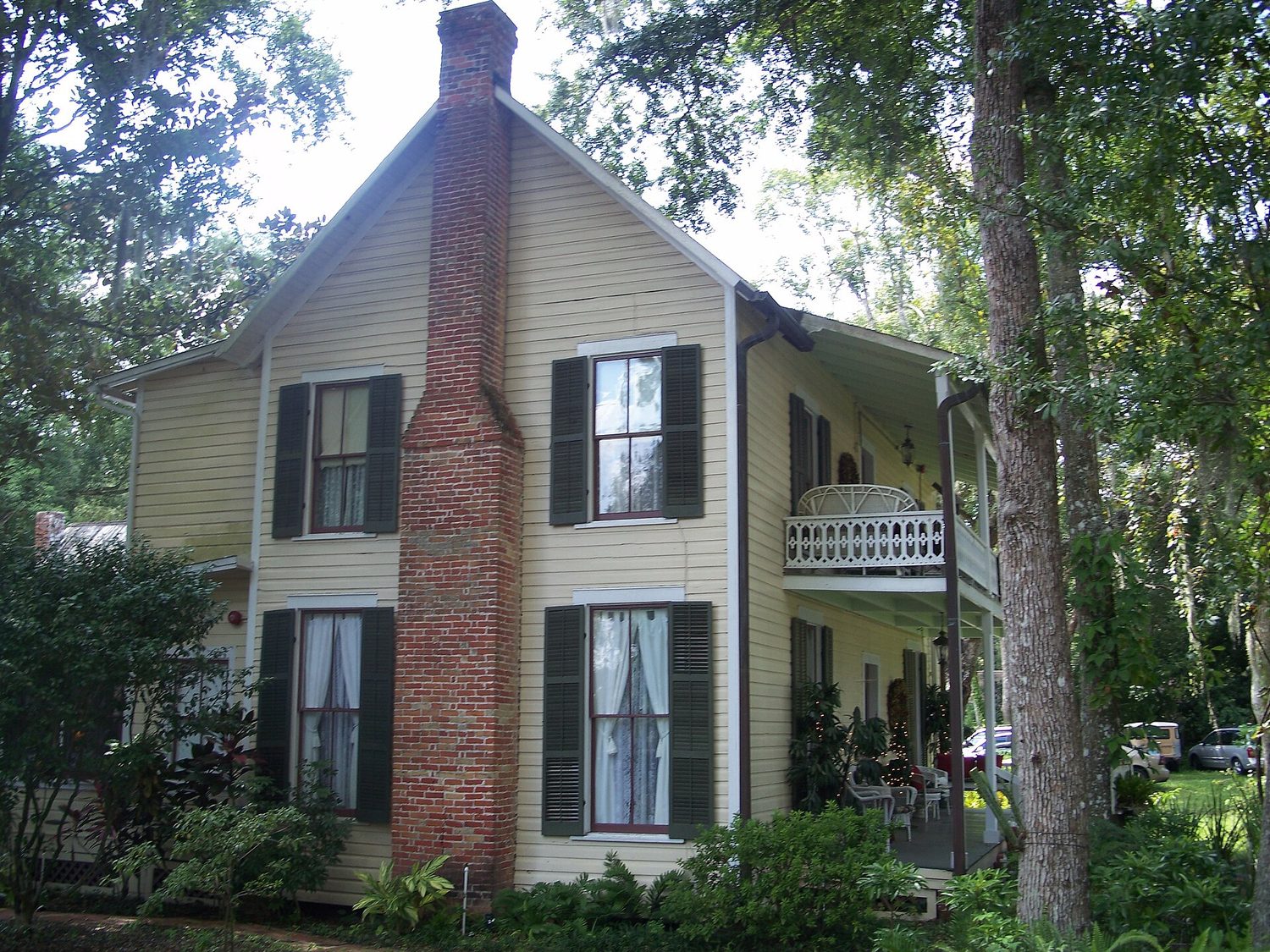
That agricultural wealth became the bones of the downtown you see today. The historic houses and buildings along the main streets are the direct descendants of celery money, solid and well-kept, with the kind of quiet permanence that comes from being built on something real. The town officially incorporated in 1925 and became a city by referendum in 1967, but the character was set long before—a working town that happened to grow into a charming one, not a planned community that put up a fake past.
What to See and Do in Oviedo on a Day Trip
A day trip to Oviedo doesn’t require a spreadsheet. Park free, and walk. The downtown loop is small enough to cover on foot, and that’s the point. You’ll pass historic homes with their porches and painted trim, the old commercial buildings that have been repurposed without losing their bones, and, of course, chickens. They’re everywhere, and spotting them becomes a low-stakes game: around the corner, under a bench, mid-stride across a crosswalk.
If you want a more structured experience, there’s the history itself. The Lake Jesup Settlement site is a mile northwest, the spot where those forty families started a trading post that grew into a town. It’s a good anchor for understanding how Oviedo got here. But mostly, the day is about absorbing the vibe—slow, friendly, and refreshingly free of the crowds that cluster around Sanford’s more polished attractions. You’re not here to check off sights; you’re here to let the town happen to you.
Oviedo vs Sanford: A Practical Side-by-Side
| Category | Oviedo | Sanford |
|---|---|---|
| Distance from Oviedo | — | 11 miles |
| Atmosphere | Unhurried, quirky, chicken-led | More formal, brick-and-curated |
| Historic district | Small, walkable, residential feel | Larger, with more commercial polish |
| Signature attraction | Free-roaming chickens | Porchfest (annual music event) |
| Crowd factor | Low | Higher, especially on event weekends |
| Day-trip pace | Stroll and observe | Browse and explore |
The distance is the easy part: Sanford is 11 miles north of Oviedo, a quick drive that puts you in a different world. Sanford has its own appeal—the historic waterfront, the restaurants, the energy of a town that’s leaned hard into its revival. But it also has the crowds that come with that. Oviedo’s charm is that it hasn’t bothered to compete. It’s not trying to be a destination; it just is one, and the chickens are the proof.
When to Visit: Great Day in the Country and Beyond
The best time to visit Oviedo is arguably the second weekend in November, when the Oviedo Woman’s Club hosts Great Day in the Country. Running since about 1974, the 2026 edition will be the 52nd, and it’s a full weekend of arts, crafts, food, and community stalls. Parking is free, and proceeds go to local scholarships, schools, and community grants—so you’re having a good time and doing a little good while you’re at it.
But Oviedo doesn’t need a festival to justify a visit. Any Saturday with mild weather works. The chickens are out year-round, and the historic district doesn’t shut down when the event tents come down. If you want to combine it with a nearby event, Sanford’s Porchfest is an option, but you’re better off letting Oviedo be its own thing—a standalone day trip with no side quest required.
The Verdict: Which Town Wins Your Saturday?
If you want a packed itinerary, a curated historic district, and the hum of a town that’s actively courting visitors, Sanford is your pick. It’s a fine town, and Porchfest is a fine time. But if you want a Saturday that feels like a exhale—where the most demanding decision is whether to step aside for a rooster—Oviedo wins.
The chickens are the difference. They’re not a gimmick; they’re a philosophy. Oviedo is a town that doesn’t feel the need to tidy itself up for you. Its history is real, its downtown is genuine, and its feathery residents are a constant reminder that this place operates on its own schedule. For travelers who want charm without a crowd, Oviedo is the answer. It’s 11 miles from Sanford, and a world away.
Common questions
- Why are there chickens in downtown Oviedo?
- The chickens are the town's mascots and have roamed downtown for years, taking over the historic streets while you explore. Locals feed and protect them, and they're a quirky part of Oviedo's charm, alongside its old houses and buildings. You'll see them near shops and sidewalks.
- What is Oviedo known for besides chickens?
- Oviedo is known for its historic downtown, celery and citrus farming history, and the Lake Jesup Settlement that started in 1875. It's a small town with a rich past, and today it's a residential community with a median home value of $428,500 and a population of about 39,990.
- Is Oviedo worth visiting for a day trip?
- Yes, if you like historic small towns with a quirky twist—the chickens are a must-see. You can walk the downtown, see old buildings, and enjoy local events like Great Day in the Country in November. It's not a big attraction hub, but it's a pleasant stop near Sanford.
- What is the Great Day in the Country event in Oviedo?
- It's an annual November weekend festival run by the Oviedo Woman's Club since about 1974, with arts, crafts, food, and community stalls. Parking is free, and proceeds go to local scholarships and grants. The 2026 edition is the 52nd, so it's a long-standing tradition.
- How far is Oviedo from Sanford and other towns?
- Sanford is 11 miles away, so you can easily visit both. Altamonte Springs is 14 miles, Mount Dora is 33 miles, Clermont is 38 miles, and Flagler Beach is 56 miles. That makes Oviedo a good base for day trips to those places.
- What is Oviedo's history and how old is the town?
- Settlement began in the early 1800s, and the Lake Jesup Settlement started in 1875 with about forty families. It became a town in 1925 and a city by referendum in 1967. Andrew Aulin named it after Oviedo, Spain, to honor the state's Spanish heritage.
Every business named above is one we hold a listing for, and every date traces to a source on our sources page. We do not describe menus, interiors or service we have not verified. Details change — confirm before you travel.