Guides · Oviedo, Florida
The History of Oviedo in 6 Landmarks
The chickens do not care about the census. They do not care that Oviedo’s median household income sits at $114,092, or that 55.8 percent of the town holds a bachelor’s degree. The roosters answer the dawn, not the Chamber of Commerce. But if you want to understand how a celery town became a commuter haven with 39,990 people and a downtown full of feral poultry, you have to walk the landmarks. Here is that walk.
The Lake Jesup Settlement Site
Start a mile northwest of downtown. The ground there is flat, sandy, and swamp-adjacent—exactly the kind of place nobody builds a city on purpose. But in 1875, roughly forty families did. They called it the Lake Jesup Settlement, and they turned it into a trading post.
The lake itself is the reason. Lake Jesup is wide, shallow, and full of alligators. In the 1800s, it was also a highway. Steamboats came up from the St. Johns River, hauling cotton, citrus, and passengers. The settlement sat at the water’s edge, close enough to trade, far enough from the bigger port at Mellonville.
That trading post grew. It grew into a store, then a crossroads, then a town. The original settlement site is not a preserved park with plaques. It is ordinary residential land now. But stand there, near the water, and you are standing at the exact point where Oviedo’s entire history pivots. Forty families. A lake. A boat. That is the whole origin story, and it is not a romantic one. It is mercantile.
The Post Office Where Oviedo Got Its Name
Settlement got a post office in the 1880s. The man behind the counter was Andrew Aulin, an early settler and shopkeeper. He had the authority to name the place, and he chose Oviedo—after the Spanish city and its university.
Aulin was not sentimental. He was strategic. Florida in the late 1800s was still defining its identity, and the Spanish heritage was part of the pitch. Naming the post office after a Spanish university town signaled that this was not just a swamp outpost. It was a place with cultural intentions.
The original post office building is gone. But the name stuck, and it tells you something important. The founders were not thinking about oranges or chickens. They were thinking about legitimacy. They wanted Oviedo to sound serious. It worked, mostly. The university connection is real, but the town that grew up around it became famous for something far less academic: birds that refuse to cross the street on a schedule.
The Citrus and Celery Grounds
Agriculture ran this economy well into the 1940s. Citrus came first. Then celery took over, and celery is why Oviedo’s downtown looks the way it does—brick buildings, wide streets, a commercial core that feels older than the surrounding subdivisions.
The citrus side of the story has one name you need to know: Butler Boston. He is credited with successfully grafting tangerine budwood, and he also brought in the temple orange from Jamaica. That is not a small footnote. The temple orange became a major commercial variety across Florida. Boston did the work in Oviedo, and the groves around town carried it.
Celery was different. Celery is a heavy, water-intensive crop, and Oviedo’s flat, wet land was perfect for it. For decades, the town’s prosperity came from rows of green stalks loaded onto railcars. The "Celery City" nickname predates the chickens. The money built the downtown. The packing houses are gone, but the commercial blocks they paid for are still standing, which is why Oviedo’s main street does not look like a strip mall.
By the 1940s, the farms began to fade. Freezes hit the citrus. Land values rose. The celery moved south. What remained was the built environment—and a town that had to figure out what came next.
The 1925 Town Charter
Oviedo incorporated as a town in 1925. That year matters because it is the hinge between the agricultural era and the civic era. The charter did not change the crops. It changed the governance. The town could now tax, zone, and regulate. It could build infrastructure that did not depend on the whims of a single packing company.
The 1920s were a boom time across Florida, and Oviedo got its share of the energy. The downtown took shape in this period—the storefronts, the commercial blocks, the streets that still carry the town’s pedestrian life today. The chickens, for the record, were not part of the plan. Nobody chartered a town to attract poultry.
The town charter lasted 42 years. Then the population grew, the postwar suburbs crept in from Orlando, and the old structure no longer fit. The town became a city in 1967, by referendum. That vote was not about chickens. It was about services, roads, and the reality that Oviedo was no longer a farming village.
The Historic Homes and Buildings
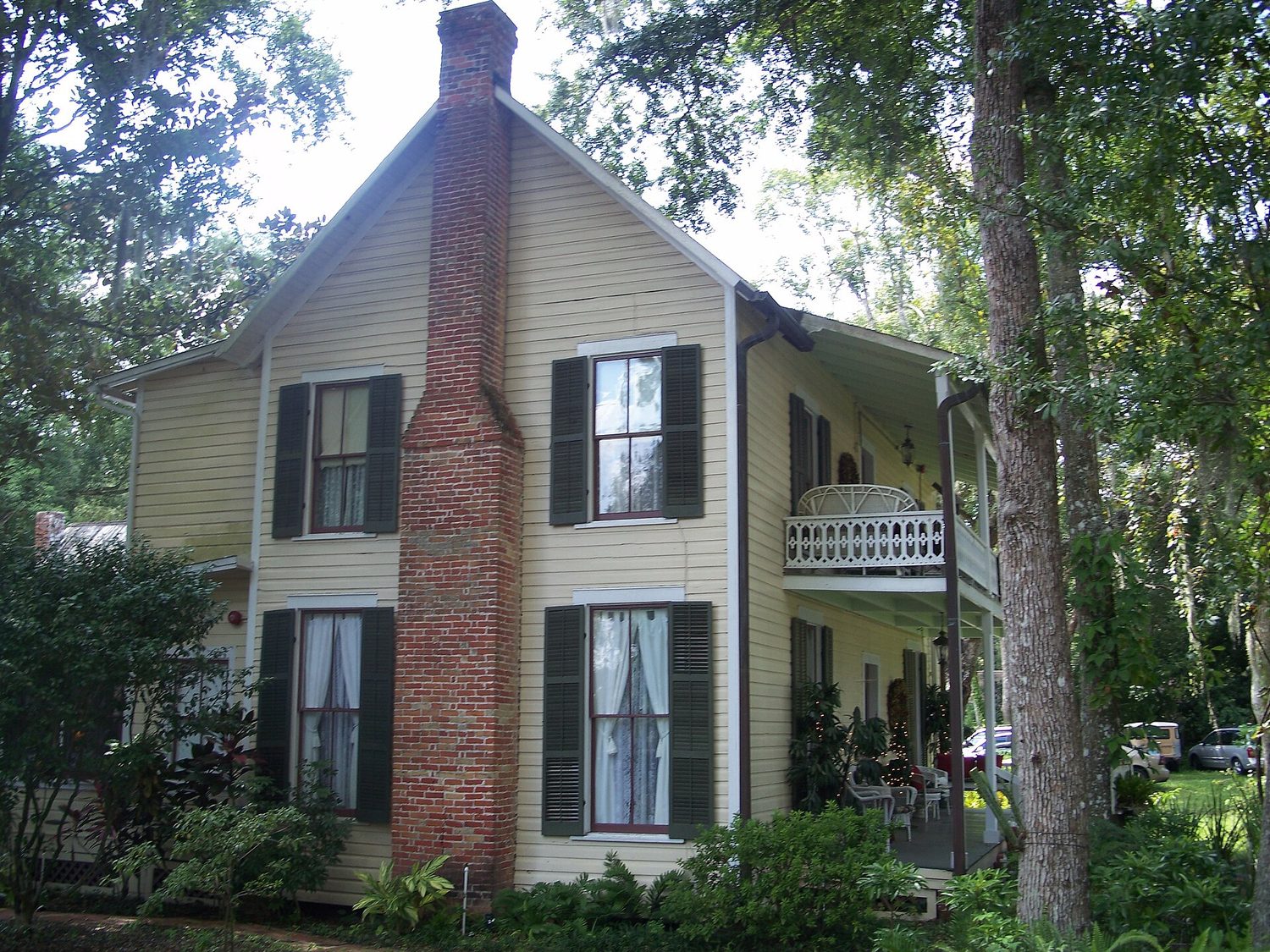
Walk downtown and the history is not in museums. It is in the houses. Oviedo is known for its historic buildings, and those structures carry the visual memory of the celery boom. Frame houses with deep porches. Brick storefronts. A commercial core that has not been torn down and replaced with a parking lot.
These buildings survived because the economy changed slowly. There was no oil boom, no tech surge, no reason to demolish the old block for something taller. The town just kept using them. That is rare in Central Florida, where most towns tore down their old cores to make room for wider roads and chain retail.
The census tells you why it matters. There are 13,823 housing units in Oviedo. Only 78 are held for seasonal or recreational use. This is not a vacation town. People live here. They live in the historic houses and in the subdivisions that ring them. The median home value is $428,500, and the median gross rent is $1,963. Those numbers are not cheap, but they are not Miami either. They reflect a town that became a bedroom community without bulldozing its memory.
The Chickens of Downtown
Every town has a mascot. Oviedo’s is accidental. The chickens roam downtown, and they have become the symbol of the place. They are not native. They are not protected. They are just chickens, and they refuse to leave.
The birds show up in the town’s branding, in the festival culture, and in the daily rhythm of the sidewalks. They cross in front of cars. They peck at nothing. They act as if they own the place, which, in a way, they do. The chickens are not a landmark in the traditional sense—no plaque, no foundation—but they are the reason people remember Oviedo.
The town leans into it. The name of the local publication? The Chickens of Oviedo. That is not ironic. That is acceptance. The celery money built the downtown. The chickens took it over. That is the whole story of the town in one sentence.
Oviedo today has a median age of 37.2 years. The unemployment rate is 4.6 percent. The population is 39,990, and 548 housing units sit vacant. Those are not the numbers of a struggling place. They are the numbers of a town that grew up, got a little suburban, and kept its center alive.
The landmarks are modest. A lake. A post office site. A few farm histories. A charter. Some old houses. And the chickens.
Visit on a weekday and you will see the birds. You will see the old brick. You will see a downtown that is not trying to be something else. That is the rarity. Oviedo did not invent itself for tourists. It just kept what it had, and the chickens stayed to guard it.
Every business named above is one we hold a listing for, and every date traces to a source on our sources page. We do not describe menus, interiors or service we have not verified. Details change — confirm before you travel.