Guides · Oviedo, Florida
Why Oviedo Is Where It Is
The chickens own the sidewalks, but the street grid was paid for by celery, and the town’s name came from a shopkeeper with a soft spot for Spanish universities.
The Chickens Inherited a Grid
Walk downtown Oviedo and you will step around them: the chickens. They peck at the curb, cross at their leisure, and generally act like they hold the deed to the place. They do, in a way. They are the mascots nobody voted for and everybody defends. But the chickens did not build this town. Celery did.
The settlement that became Oviedo started in the early 1800s, when the land was still swamp and scrub. By 1875, the Lake Jesup Settlement was formalized, with roughly forty families carving out a living near the lake’s northern shore. Lake Jesup itself sits about a mile northwest of where the town would eventually grow. That settlement was a trading post first, a place to move goods and supplies before it was a place to raise a flag.
Forty families is not a city. It is a neighborhood that happens to be far from everything else. But it was enough to anchor the area, and the trading post did what trading posts do: it drew people, then drew more people, then drew a post office.
A Name From Spain, a Backbone of Citrus
Andrew Aulin was an early settler and a shopkeeper. He is the man who named the post office Oviedo, after the Spanish city and its university. The gesture was meant to honor Florida’s Spanish heritage. It worked, in the sense that we are still saying the name out loud today. Whether the chickens care about the etymology is unknown. They do not seem to care about much.
The economy ran on agriculture well into the 1940s. Citrus and celery were the twin engines. Celery, in particular, turned the muck around Oviedo into money. The downtown that exists today was paid for by those green stalks, and the historic houses and buildings that remain are the receipts.
Citrus was the other half of the story. Butler Boston, an early grower, is credited with successfully grafting tangerine budwood and bringing the temple orange over from Jamaica. That is real horticultural work, the kind that changes what ends up in a grocery store decades later. The temple orange is not a footnote; it is a tangible result of someone paying attention to the trees.
Oviedo became a town in 1925. That was the formal step. The city status came later, by referendum in 1967. Between those two dates, the place just kept growing, slowly, on the strength of soil and water.
The Modern Numbers, Minus the Spin
The census figures tell a straightforward story. Oviedo’s population is 39,990 people, with a median age of 37.2 years. That is a working-age town, not a retirement colony. The median household income is $114,092, which is solid, and the unemployment rate sits at 4.6 percent. The median home value is $428,500, and the median gross rent is $1,963 per month.
There are 13,823 total housing units. Of those, 548 are vacant, and just 78 are held for seasonal or recreational use. That last number is the telling one. Oviedo is not a vacation rental market. It is a place where people actually live. The seasonal count is almost negligible, which means the town does not empty out when the weather turns. It stays put.
The education numbers back up the income figures. 55.8 percent of residents hold a bachelor’s degree or higher. That is a well-educated population, and it shows in the kinds of jobs people commute to and the way the town votes on local matters.
Why the Town Sits Where It Sits
The simple answer is the lake and the muck. Lake Jesup provided water and transport. The wetlands around it provided soil that was almost absurdly fertile once drained and worked. The settlement was a mile from the lake, close enough to use it but high enough to avoid the worst of the floods. That is not glamorous, but it is honest. Towns get built where the resources are, and the resources here were water, dirt, and the willingness to sweat.
The chickens arrived later, and nobody can say exactly when. They just showed up, multiplied, and became the unofficial civic identity. The town leans into it now. The chickens are on signs, on merchandise, in the minds of anyone who has ever tried to parallel park while a rooster stared them down. They are not a gimmick. They are a fact of life.
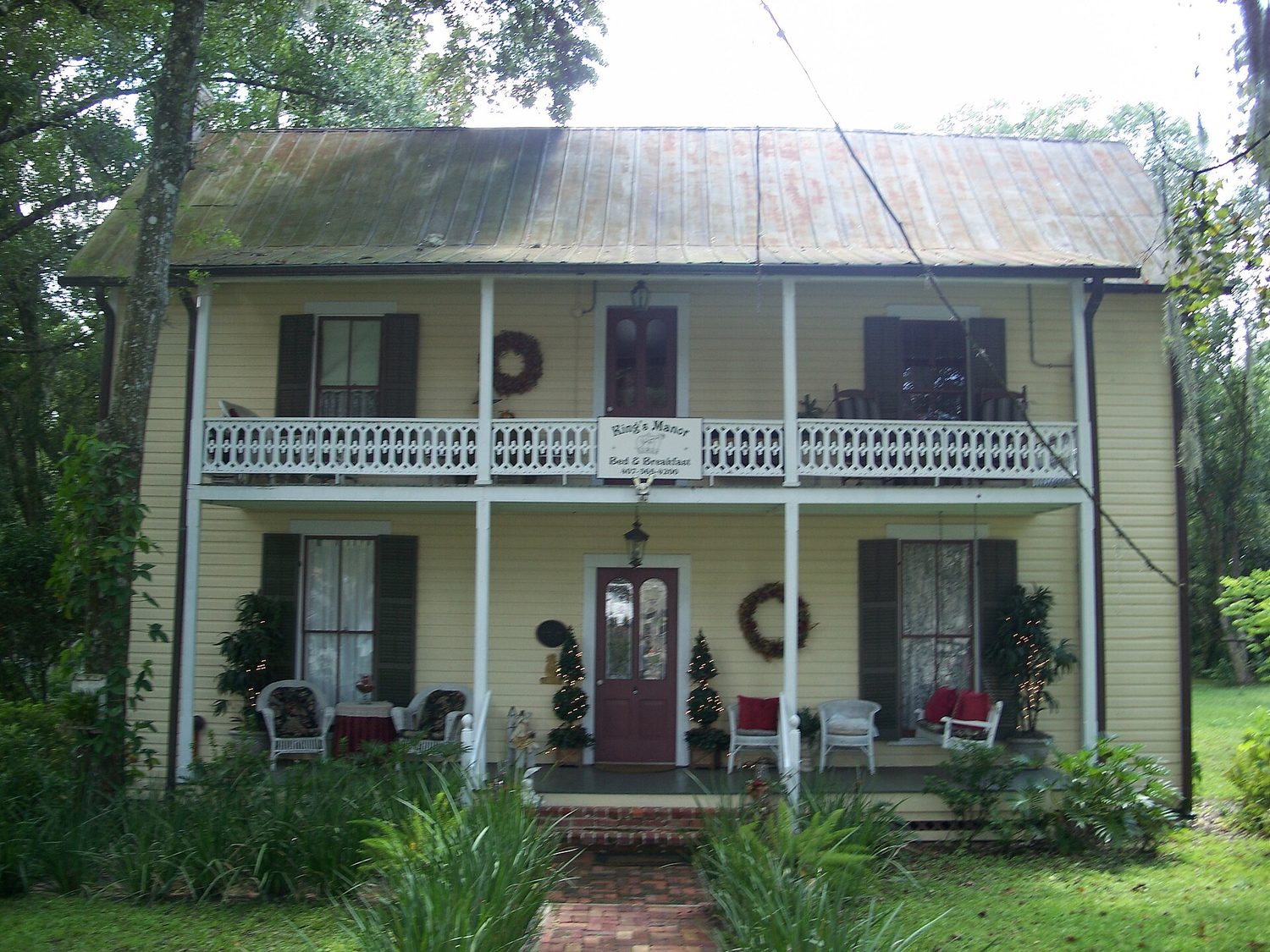
The historic houses and buildings are still there, standing next to the new construction. The town has not torn itself down to become a facsimile of something else. It kept the old bones and added what it needed. The result is a town that knows where it came from, even if the current residents are more likely to be chased by a hen than by a celery farmer.
Oviedo is not a secret, and it is not a hidden gem. It is a mid-sized Florida city with a strong economy, a smart population, and a downtown that smells faintly of history and poultry. The chickens do not care about any of that. They just want the crumbs.
Every business named above is one we hold a listing for, and every date traces to a source on our sources page. We do not describe menus, interiors or service we have not verified. Details change — confirm before you travel.